
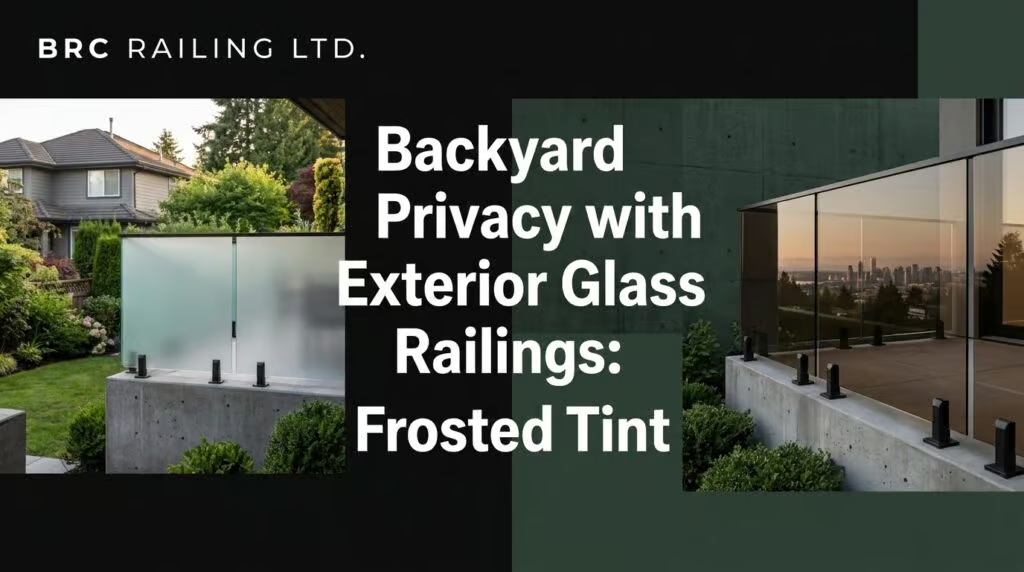
Backyard privacy with exterior glass railings—specifically frosted panels and tint options—gives you a barrier that blocks direct sightlines while keeping your outdoor space bright and open. Unlike solid wood or vinyl fences, glass privacy panels preserve natural light, resist the weather, and create a clean, modern boundary that doesn’t feel like a fortress.
The key is matching the right glass treatment to each area of your yard. Frosted panels scatter light and obscure details, while tinted panels reduce glare and add depth to the glass. When you combine thoughtful placement with the right materials, you get seclusion without sacrificing the view you actually want to keep.
Frosted Glass Panels: Privacy with Soft Light
Understanding Frost Levels: From Light Etching to Full Obscurity
Frosted glass comes in a range of textures, from a light acid etch that blurs shapes to a full satin finish that removes almost all visibility. The lighter the etch, the more light passes through and the more you can still perceive movement and color; the heavier the frost, the more complete the privacy. A mid-level frost often works best around a hot tub or outdoor shower, where you want to block close-up views but still enjoy daylight. For a ground-level deck facing a sidewalk, a heavier frost or an opaque white interlayer can provide true seclusion.
When you choose tempered or laminated frosted panels, the frosting is typically applied to one surface during manufacturing or as a durable film. We prefer glass that is frosted all the way through the thickness or has a permanent ceramic frit, because surface films can wear differently under UV exposure. The goal is a finish that looks consistent year after year.
Applications for Frosted Panels in Backyard Settings
Frosted panels are especially effective along deck perimeters, around seating nooks, and as side-yard screens. Because the glass is translucent, it blocks the neighbor’s view but still lets sunlight filter onto your patio boards. This makes a small yard feel larger and less enclosed than a solid fence. We often use frosted panels on semi-frameless railings so the hardware stays hidden and the glass runs continuously.
- Deck edges where neighbors’ windows are within view
- Hot tub or plunge pool enclosures to reduce direct sightlines
- Outdoor dining areas to create a sheltered, intimate feel
- Side yards between houses where a solid barrier would feel heavy
Tinted Glass Options: Reducing Glare and Enhancing Seclusion
Exploring Tint Shades: From Subtle Gray to Deep Bronze
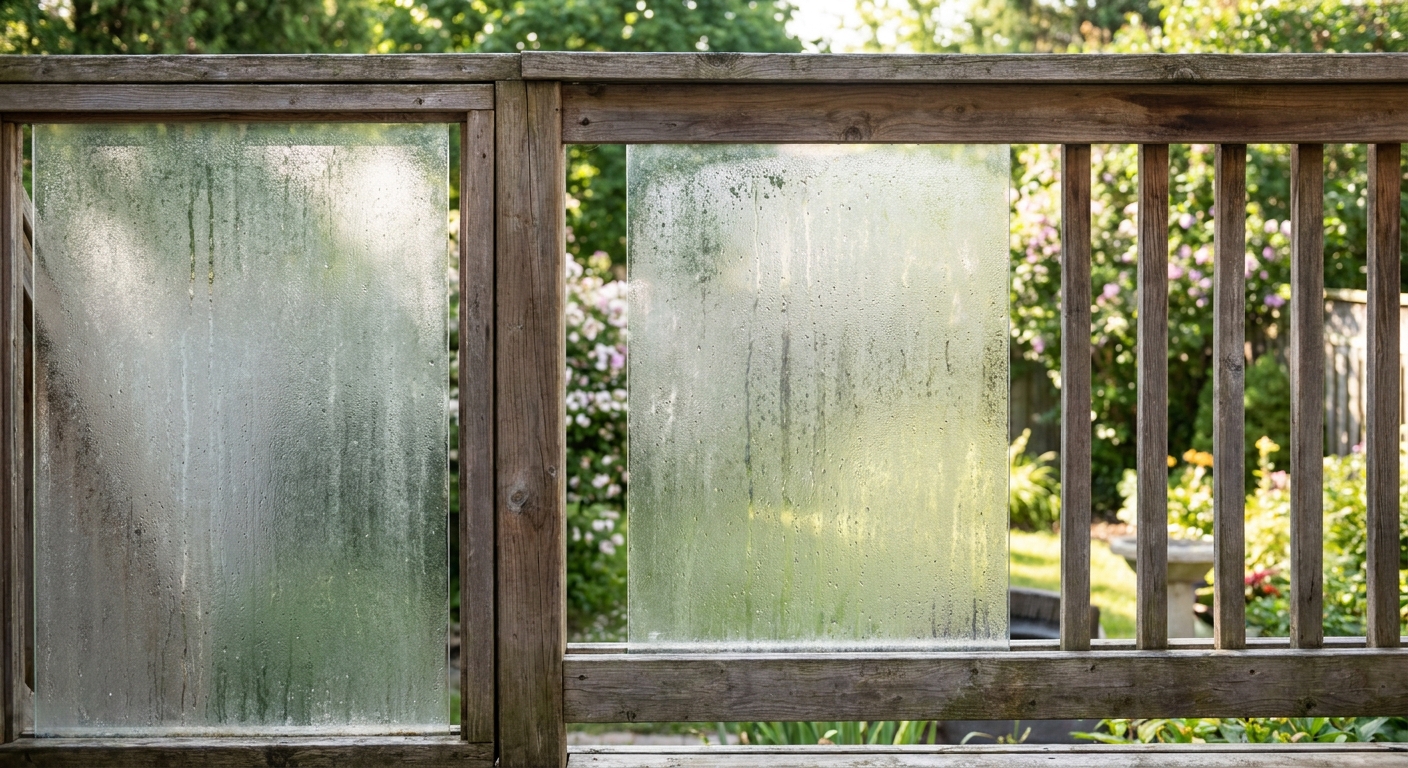
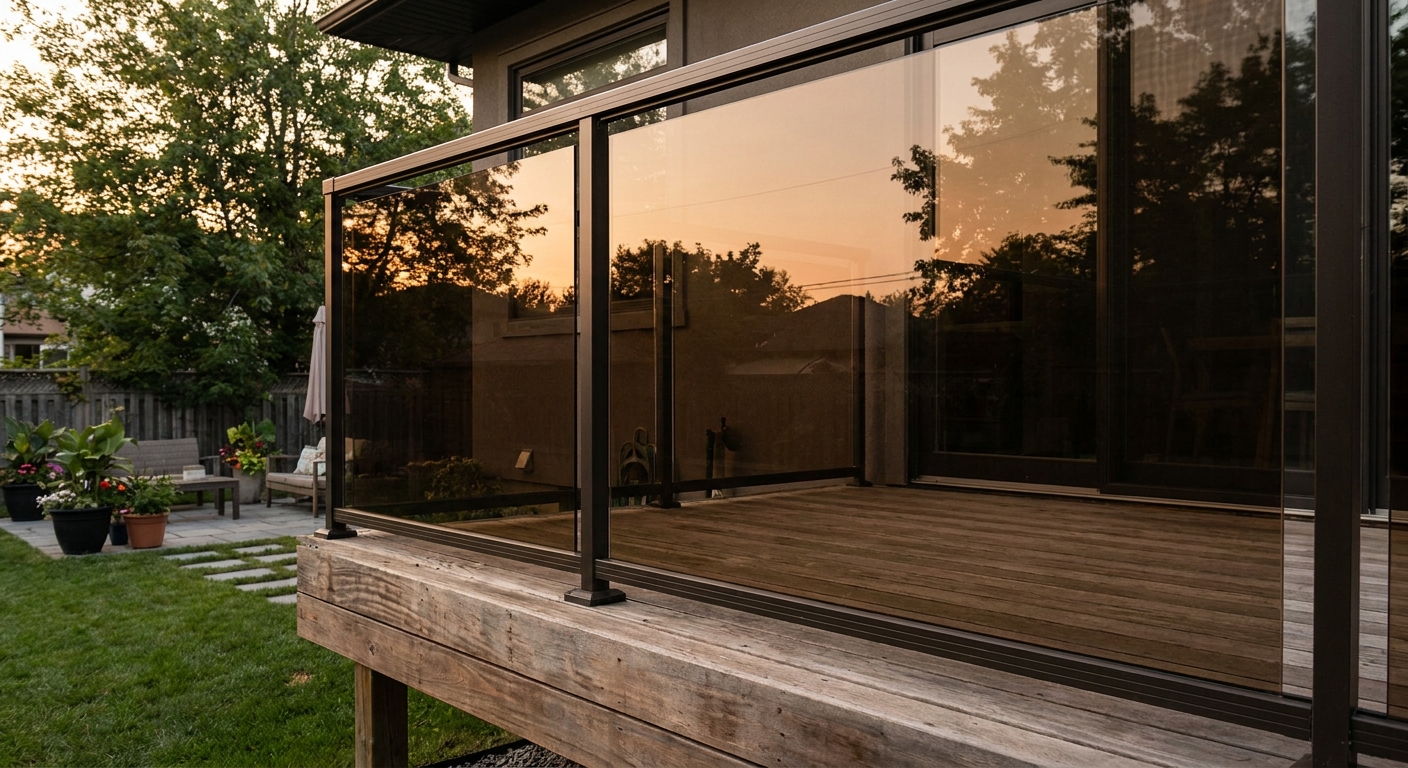
Tinted glass adds privacy by reducing the amount of visible light that passes through. A light gray or neutral tint cuts glare on bright afternoons, while a deep bronze or dark gray tint creates a mirror-like effect from the outside during the day—people outside see their own reflection, not your backyard. The shade you choose affects both the look and the level of privacy. We usually recommend a medium gray or bronze for most residential decks because it balances clarity with seclusion.
Tint can be applied as a glass body tint, where the color is part of the glass itself, or as a high-performance film. For exterior railings, body-tinted glass is often the better choice because it won’t peel, bubble, or fade under weather. The color is consistent edge to edge and stands up to cleaning.
UV Protection and Solar Heat Reduction Benefits
One practical reason to choose tint is ultraviolet protection. Tinted glass blocks a meaningful portion of UV rays, which helps prevent fading of outdoor furniture, decking, and planters. It also reduces solar heat gain on a south-facing deck, so the handrail itself stays cooler to the touch and the area next to the glass stays more comfortable through the hottest part of the day. Even a lighter tint can make a noticeable difference in glare while preserving your view.
Strategic Placement for Maximum Privacy
Identifying Sightlines and Vulnerable Areas
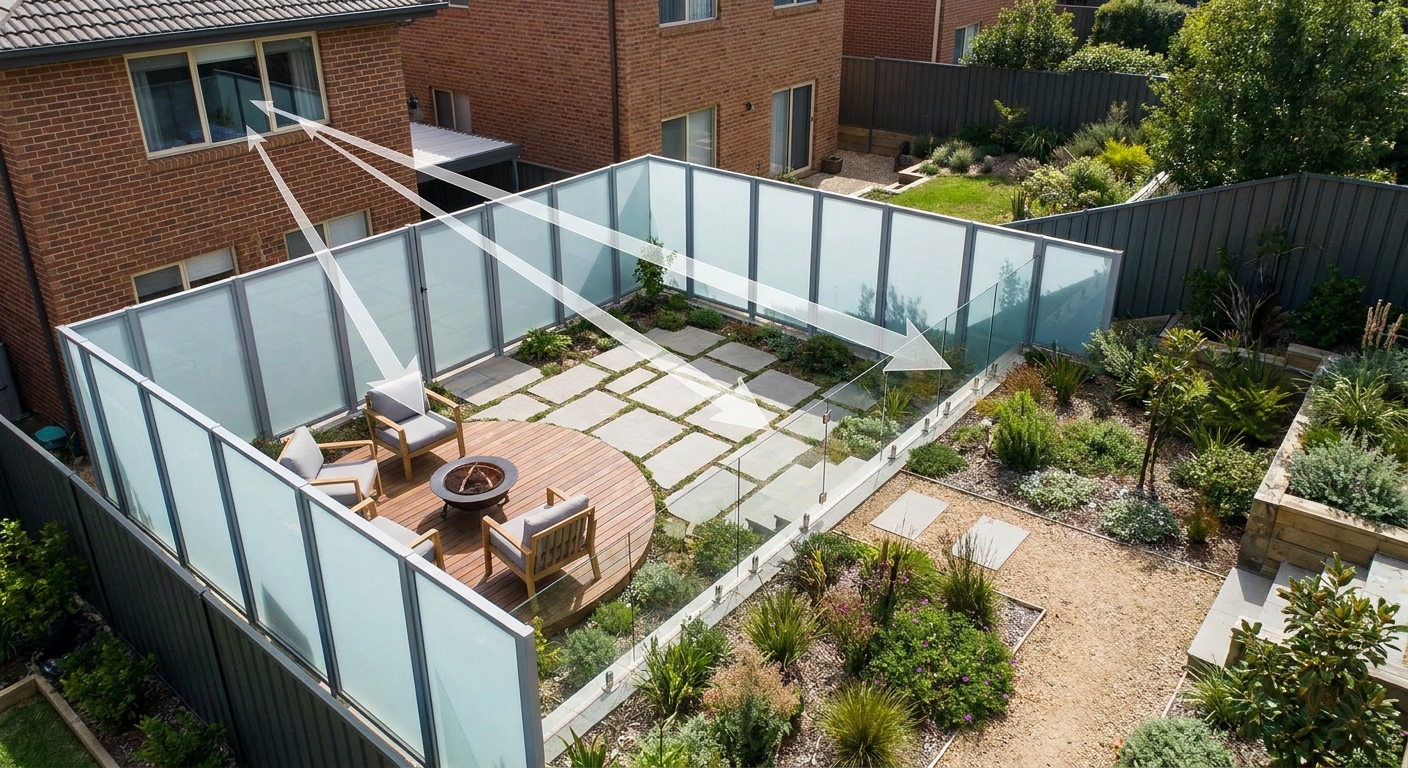
Before choosing panels, walk your yard at different times of day and note where you feel exposed. Look from your seating areas toward the neighbor’s second-story windows, the street, or the side gate. Stand at the spots where you would sit, stand, or recline, and mark the line of sight. Privacy only works when the glass breaks that line, so a panel that looks tall enough at ground level may not block a view from a raised deck next door.
We map these sightlines during a site visit, measuring the height of neighboring windows, the slope of the yard, and the distance to the property line. That allows us to recommend the correct panel height and finish for each section rather than using the same glass everywhere.
Using Glass Railings to Define Zones and Block Views
You don’t need to enclose the entire yard. A run of frosted glass along one side of a dining area can create a visual barrier, while clear glass on the other side keeps the garden view open. The same principle works for a lounging zone: place taller frosted panels behind the chairs where the neighbor looks down, and leave the opposite side lower or clear. This layered approach gives you privacy where you need it and openness where you want it.
- Use taller frosted panels on the side facing a neighboring two-story home
- Keep clear or lightly tinted panels on the side facing your own garden or view
- Place a short run of glass perpendicular to the house to separate the patio from the lawn
- Angle a tinted panel to block the view from a side street without casting shade on your plants
Combining Glass Railings with Other Privacy Features
Pairing with Wood, Metal, or Composite Frames
Glass panels don’t have to stand alone. A frosted or tinted panel set into a powder-coated aluminum frame adds a crisp, maintenance-free border that ties into modern decks. For a warmer look, wood or composite posts can frame the glass, while the glass itself still does the work of blocking views. We often recommend semi-frameless systems where the top rail is a slim aluminum cap and the bottom is hidden, letting the glass appear to float.
The frame material also affects long-term performance. Aluminum won’t rot, warp, or rust, and it holds the glass securely through freeze-thaw cycles. Wood frames may need refinishing but offer a natural texture that some homeowners prefer. Whatever frame you choose, the glass should be set in a channel that allows for slight thermal movement so the panel doesn’t crack under temperature shifts.
Incorporating Greenery and Landscaping for Layered Privacy
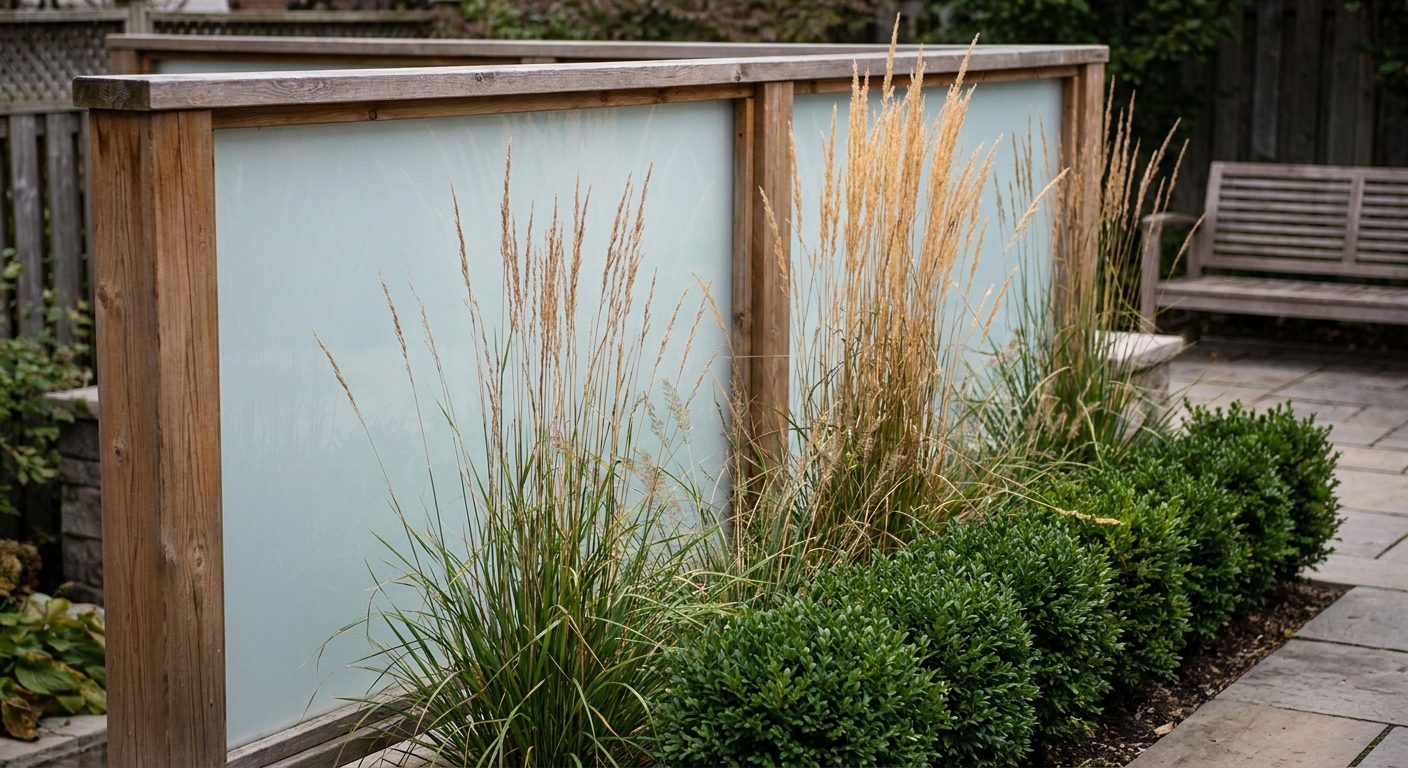
Lush plantings work beautifully with glass railings. A row of ornamental grasses or a clipped hedge in front of a frosted panel adds seasonal depth and softens the hard surface. Because the glass is translucent, the plants still get enough light to grow, and they don’t cast a heavy shadow across the deck. You can also place tall planters at the base of a clear glass section; the glass maintains the open feeling while the plants fill in the lower visual gap.
- Use evergreen shrubs for year-round screening behind tinted panels
- Train a vine on a trellis attached to the outside of a glass run for summer privacy
- Place potted bamboo or tall grasses near a hot tub enclosure to block lower sightlines
- Combine a short frosted panel with a raised planter box to reach the needed eye height
Weather Resistance and Long-Term Durability
Choosing Tempered or Laminated Glass for Safety
Exterior glass railings must meet safety standards, and that means the glass should be tempered or laminated. Tempered glass is heat-treated so that if it breaks, it shatters into small, relatively harmless pieces rather than sharp shards. Laminated glass has a plastic interlayer that holds the fragments together, which is particularly useful for overhead or high-wind applications. Both types are far stronger than ordinary annealed glass and can handle the loads required for railings.
Frosted and tinted treatments do not reduce the safety rating. The frosting or tint is applied to the surface or incorporated into the interlayer, so the structural integrity remains unchanged. Always confirm that your glass panels are stamped or labeled as safety glass for railing use.
Withstanding Wind, Rain, and Temperature Fluctuations
Glass itself is impervious to moisture, so rain, snow, and humidity won’t cause it to rot, warp, or fade. The supporting posts and hardware need to be equally weatherproof. We use aluminum posts and channels with a powder-coated finish, because aluminum resists corrosion and doesn’t need painting. The glass sits in a base shoe or channel with a gasket that cushions it and allows the panel to expand and contract slightly with temperature changes, preventing stress cracks.
We back every installation with a 10-year workmanship warranty and lifetime materials guarantee.
For coastal or high-wind areas, a thicker glass panel and closer post spacing reduce flex and vibration. Your installer should check the local wind load requirements and ensure the system is engineered for the specific exposure.
Simple Maintenance for Enduring Privacy
Routine Cleaning to Preserve Clarity and Aesthetics
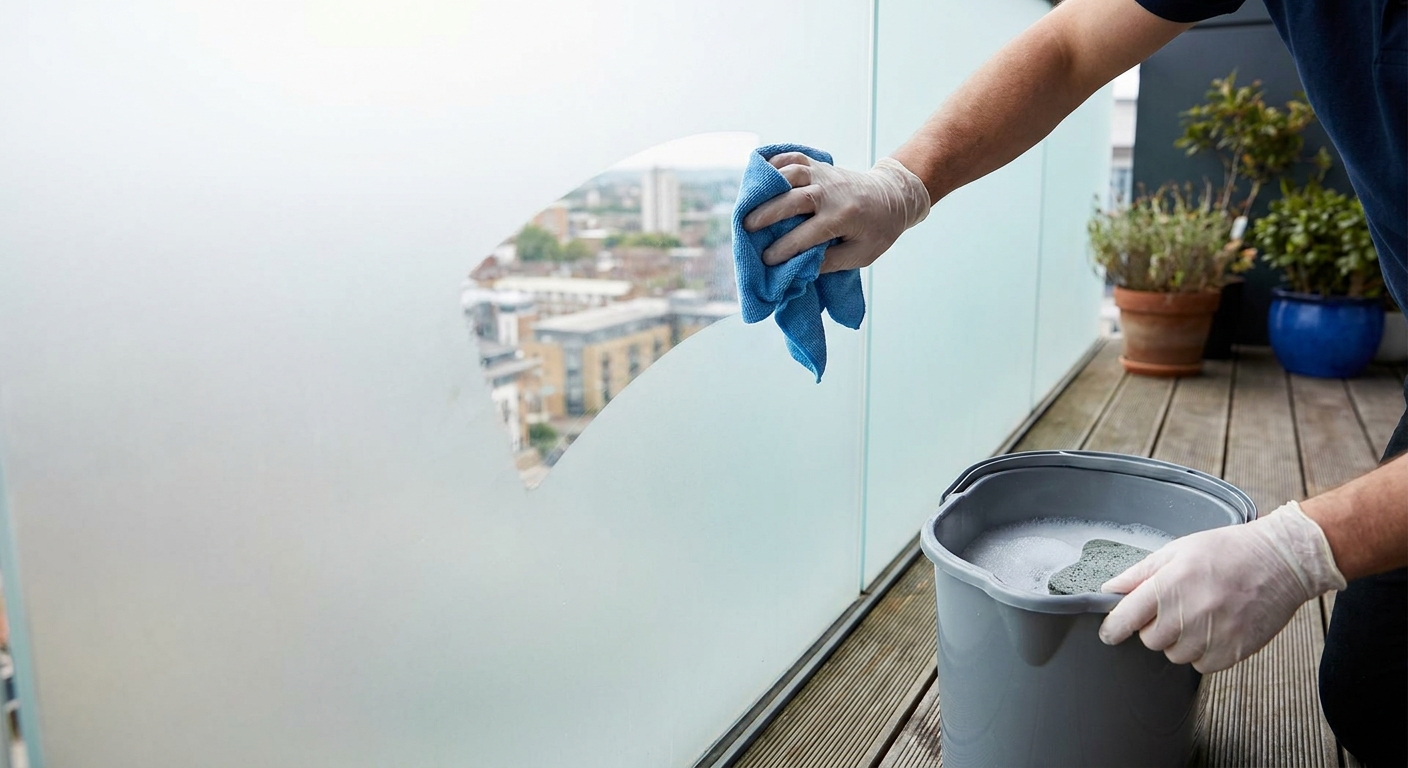
One of the ongoing advantages of glass privacy panels is how little maintenance they need. A rinse with clean water and a wipe with a soft cloth or sponge usually removes dust and pollen. For stubborn spots, a mild dish soap and water solution works well on both frosted and tinted glass. Avoid abrasive pads, scrapers, or harsh solvents, because they can scratch the surface or damage the tint or frost layer.
For frosted glass, wipe in a circular motion and dry with a microfiber cloth to avoid streaks in the etched surface. Tinted glass should be cleaned the same way, but avoid ammonia-based glass cleaners if the tint is a film rather than body tint; body-tinted glass is more tolerant. Always test any cleaning product on a small, low-visible area first.
Inspecting Hardware and Seals for Continued Performance
Once or twice a year, walk the length of the railing and check the gaskets, base channels, and post covers. Look for any cracks in the sealant, loose screws, or debris blocking drainage holes. If a gasket shifts or dries out, it can allow the glass to rattle or let water sit against the panel, which over time can stain the edge. Tightening loose hardware and clearing drainage keeps the system quiet and secure.
If you notice a chip on the edge of a tempered panel or a fogged area inside a laminated panel, have it inspected. Small surface marks can sometimes be polished, but compromised safety glass should be replaced to maintain both privacy and railing integrity.
Take the First Step Toward Your Private Backyard Retreat
Frosted and tinted exterior glass railings give you a way to reclaim your backyard without building a solid wall that blocks the sun. By choosing the right glass finish, placing panels where they actually break sightlines, and combining them with frames and plantings, you can create a secluded outdoor room that still feels open and bright. If you’re unsure which frost level or tint shade works for your yard, start with a site walk and a clear conversation about where you want privacy and where you want to keep the view. We’ll measure the sightlines, show you sample glass options, and recommend the system that fits your space and your daily routine.