

A coastal climate is not one weather event; it is a combination of moisture, salt aerosol, ultraviolet exposure, and temperature swings that work on exterior metal railings around the clock. Metal does not rot the way wood does, but it corrodes, loosens, and fades when those forces are ignored.
Understanding how coastal climate impacts exterior metal railings starts with recognizing that the visible rail and posts are only half the system. The fasteners, base plates, glass gaskets, and finish build-up are usually the first points to fail, long before the main structure shows wear.
What a Coastal Climate Does to Exterior Metal Railings
Several environmental loads act on any exterior railing installed near salt water or in a rainy coastal zone.
- Wind-driven rain: Water is pushed sideways into joints, base plates, and glass channels, not just falling on top surfaces.
- Low drying potential: Long periods of overcast, humid weather mean wet components may not dry before the next system arrives, keeping moisture in contact with metal and hardware.
- Salt aerosol: Near the water, airborne salt settles on surfaces and holds moisture against them. This accelerates corrosion of any ferrous metal and can degrade aluminum finishes if not properly coated.
- Biological growth: Moss and algae colonize shaded, damp north-facing surfaces, trapping moisture and organic acids against the railing finish.
- UV and thermal cycling: Even under cloud cover, ultraviolet light fades pigments and breaks down polymers in gaskets and coatings, while daily temperature swings cause metal to expand and contract.
- Freeze-thaw stress: Water sitting in small crevices can freeze and expand, loosening fasteners and delaminating poor-quality coatings over time.
Weak Points Where Corrosion and Loosening Start
Most railing failures begin at details, not in the middle of a rail span.
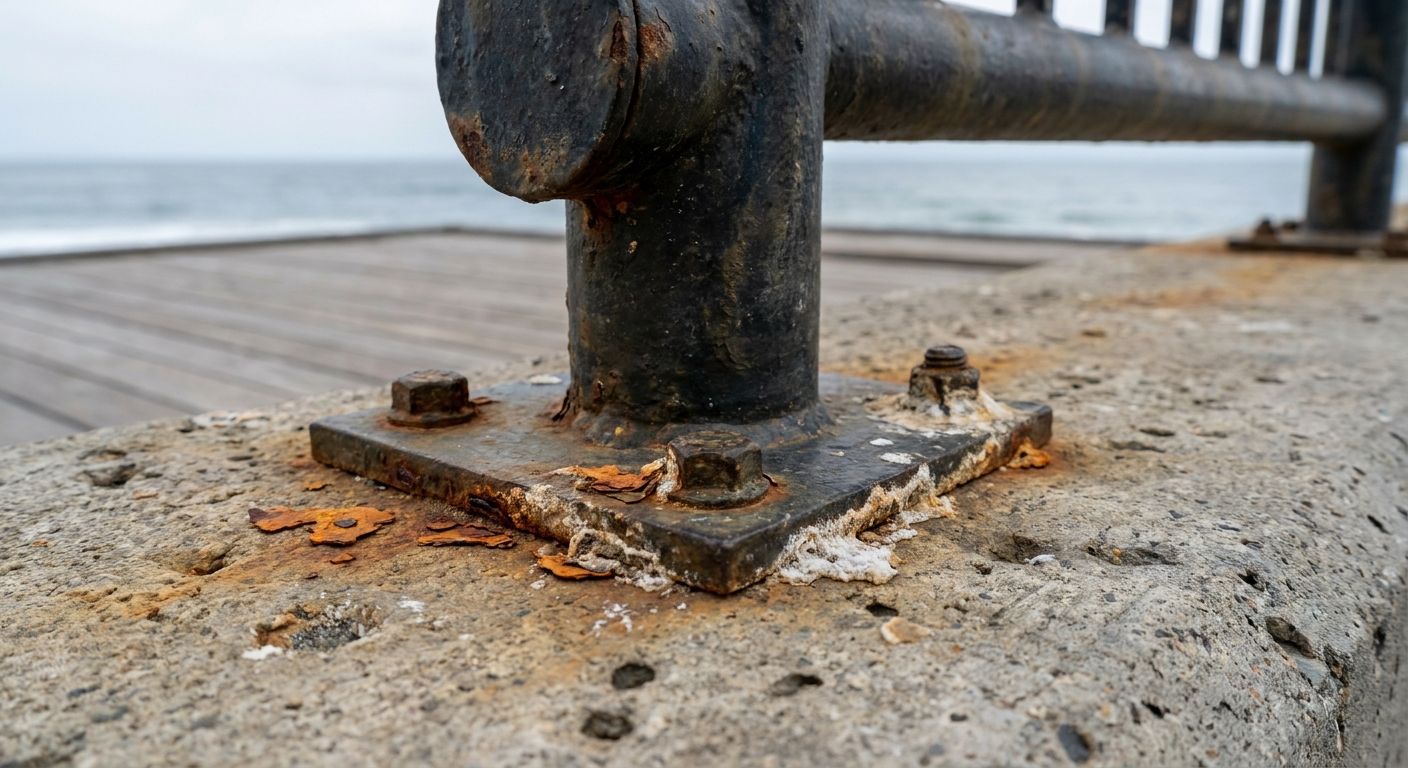
- Base plates and anchor points: These sit where water, dirt, and salt collect. If the plate is sealed directly to concrete without a standoff or drainage path, the bottom edge stays wet and the fasteners corrode.
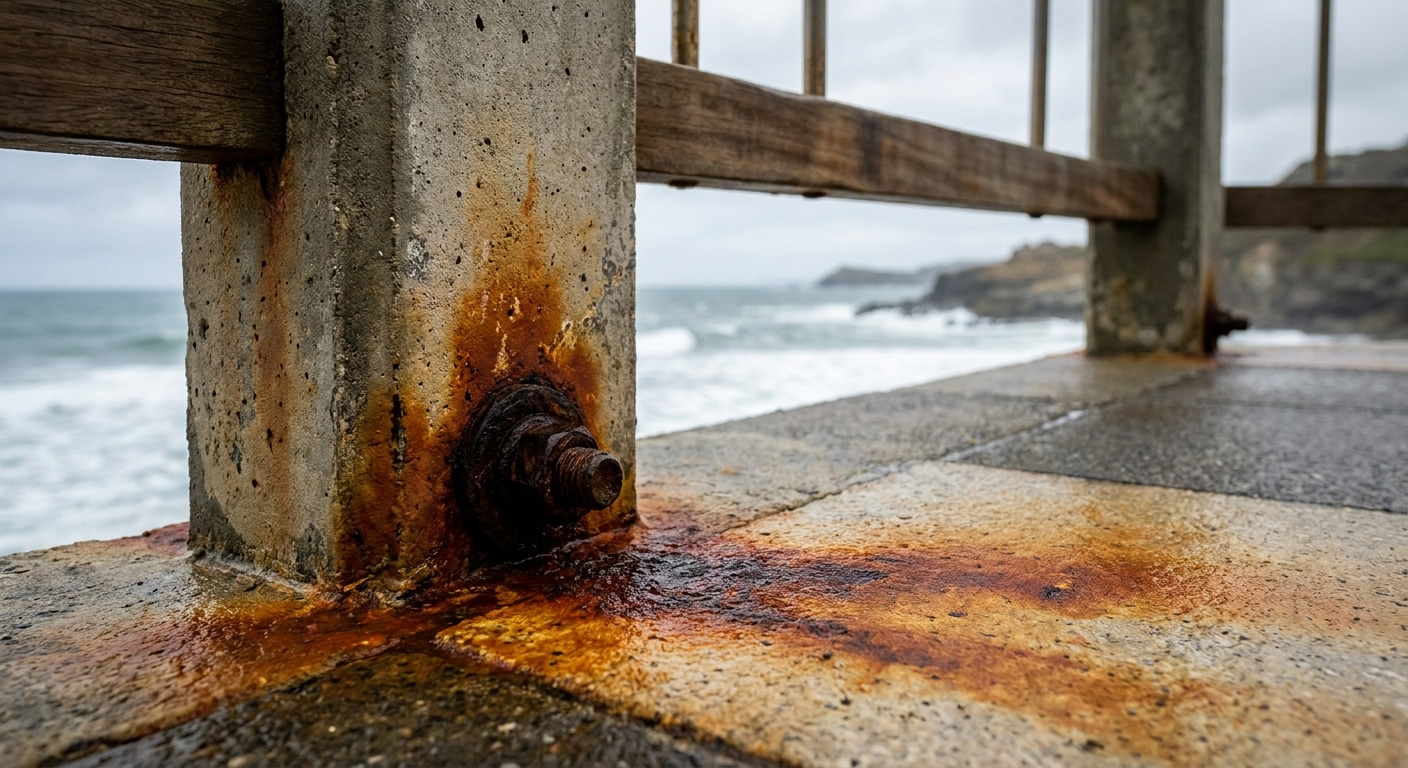
- Exposed fasteners: Carbon steel screws and bolts rust first, staining the surrounding finish and loosening the connection.
- Cut ends and drilled holes: Any raw edge or penetration is a path for moisture to get under the powder coat and start filiform corrosion.
- Glass channels and gaskets: Water trapped against glass edges can degrade EPDM or vinyl gaskets, causing glass panels to rattle or sit out of plane.
- Welded joints: Heat-affected zones on steel railings lose corrosion resistance unless the weld is properly ground, cleaned, and recoated.
Material and Finish Choices That Hold Up in Coastal Air
Material selection is the first line of defense.
Powder-Coated Aluminum
Aluminum does not rust, and a high-quality polyester or PVDF powder coat protects the surface from salt and UV. Select aluminum profiles thick enough to resist deflection; a stiffer rail puts less stress on connections and gives the powder coat a more stable substrate.
Marine-Grade Stainless Hardware
All fasteners, hinges, and connectors should be 316 stainless steel, not 304. 316 contains molybdenum, which resists pitting from chlorides in salt air. Hidden fastener systems also reduce the number of exposed screw heads that can trap salt and moisture.
Glass and Gaskets
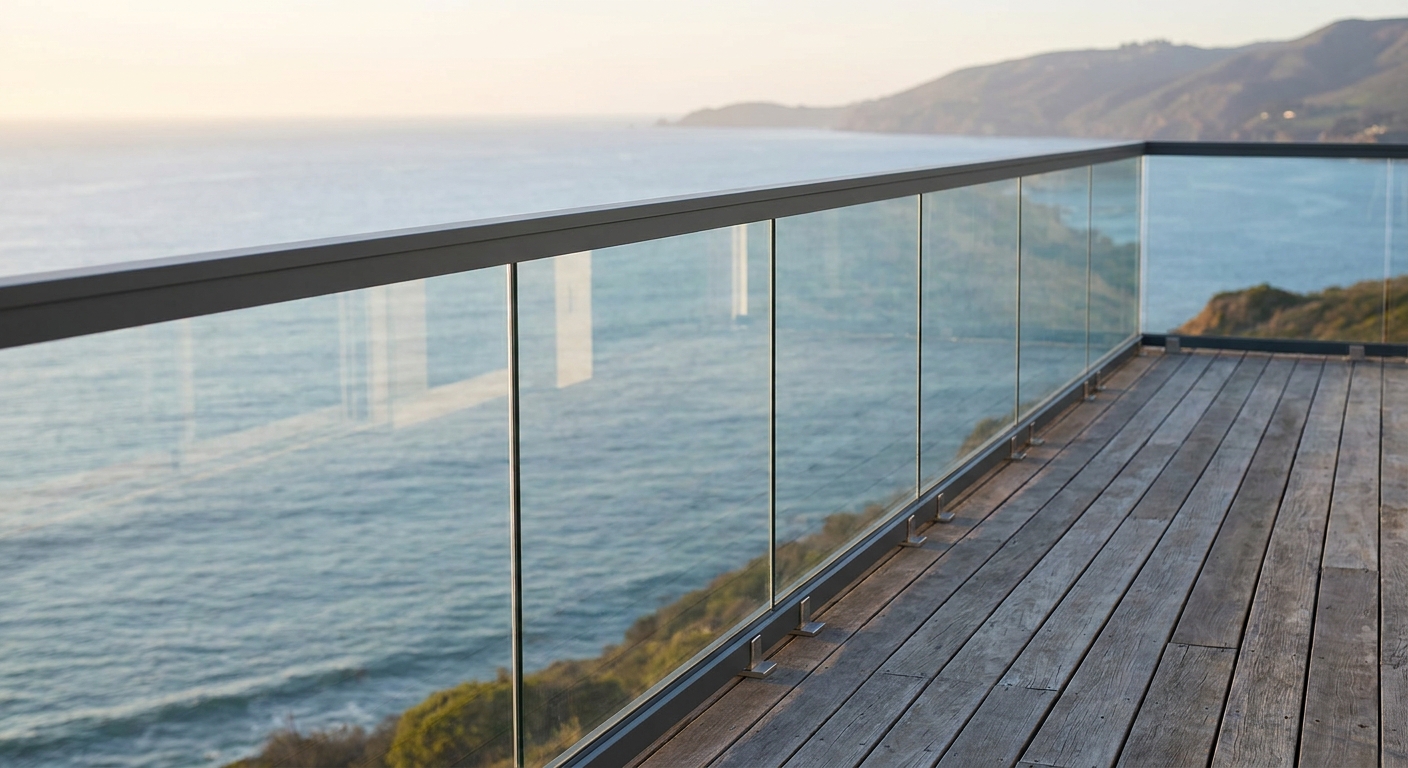
For glass railing systems, specify tempered or laminated safety glass with marine-grade EPDM gaskets. EPDM remains flexible through UV and temperature swings, while lower-cost vinyl can harden and crack within a few seasons.
Installation Details That Protect Railings Over Time
Even the right material underperforms if installed without coastal detailing.
- Standoff base plates: Lift the post base off the concrete with stainless standoff sleeves or a sloped base plate so water drains away instead of pooling around the anchor.
- Hidden fastener channels: Use continuous channels that grip the panel or glass from the side, minimizing exposed hardware and creating cleaner lines that also shed water.
- Weep holes and drainage gaps: Any channel or track that holds glass or infill should have weep holes at the low end or a 6 mm gap to let water escape.
- Isolation washers: Separate dissimilar metals with nylon or EPDM washers to prevent galvanic corrosion between aluminum and steel or stainless and mild steel.
- Proper slope on top surfaces: Top rails should shed water outward, not hold it against the infill. A slight slope or a drip edge helps.
We back every exterior railing installation with a 10-year workmanship warranty and a lifetime warranty on materials, so if a post loosens or a coating fails due to installation or material defect, we repair it at no cost.
A Seasonal Maintenance Routine That Extends Service Life
Coastal railings do not need constant attention, but a simple routine catches small problems before they become replacements.
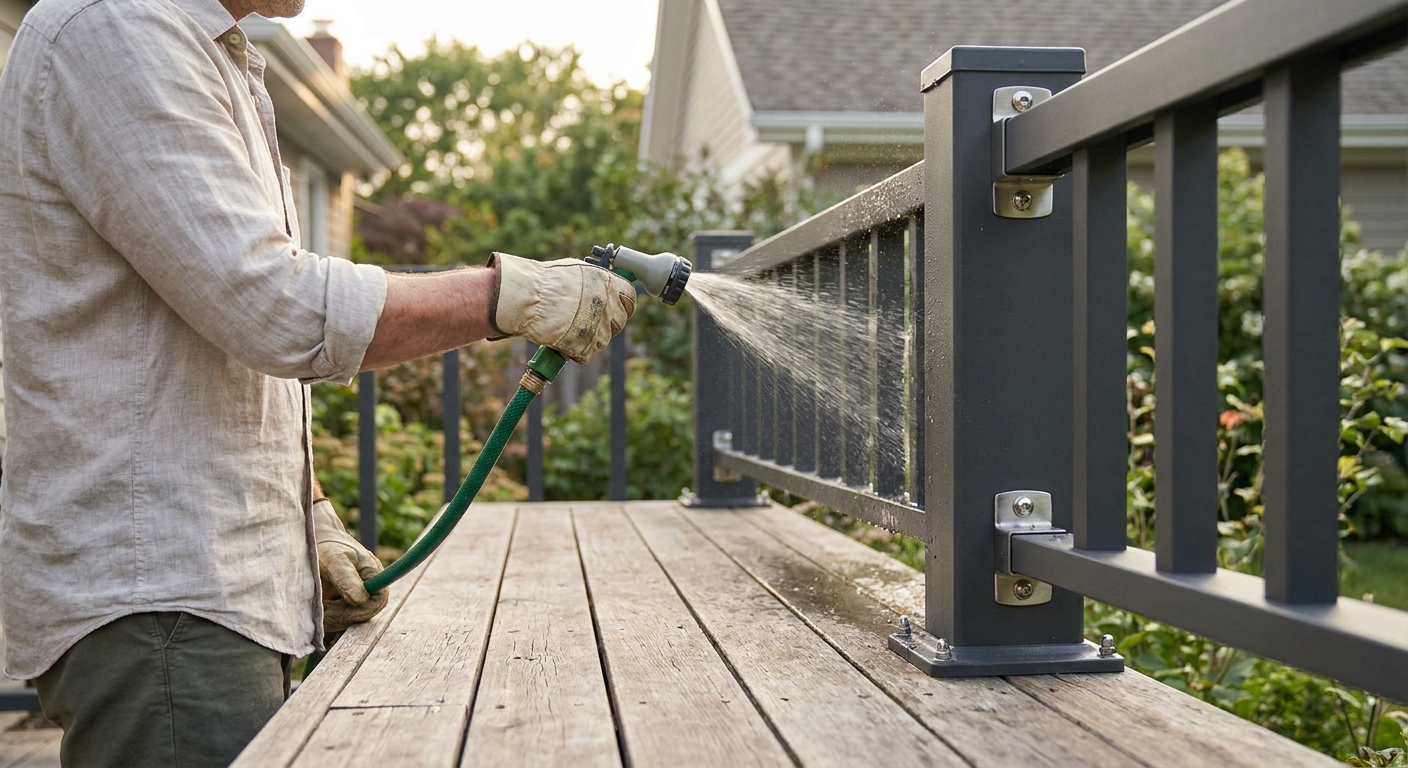
- Wash twice a year: Use a sponge and a pH-neutral soap with fresh water. Avoid abrasive pads that scratch the powder coat and create corrosion sites.
- Inspect fasteners and base plates: Tighten any loose bolts and look for white or red corrosion at the edges of plates. If you see salt crust, rinse it away.
- Check for standing water: After rain, note whether water pools inside channels, around glass notches, or under post bases. Clear debris that blocks weep holes.
- Touch up chips immediately: A small stone chip can expose raw metal. Use a manufacturer-approved touch-up paint or clear coat to seal the damage.
- Lubricate hinges and latches: On gates, use a dry silicone or Teflon lubricant on moving parts, but keep lubricants off the glass and gaskets.
If you are planning exterior railings for a coastal home or exposed deck, focus on the details that keep water and salt moving away from the metal. Contact us to discuss your site conditions and the protective details that belong in your railing system.